Wearable OEM InsightsIn-DepthPractical
2026年7月24日
How to Choose a GPS Sports Smartwatch for Your Brand or OEM Project
A B2B guide to GPS sports watches, L1 versus L1+L5 positioning, AMOLED, battery, water resistance, testing, and OEM customization.
GPS sports smartwatches serve running, cycling, hiking, mountaineering, fitness, travel, and outdoor markets. Choosing one is not as simple as selecting the longest specification list.
Positioning depends on the GNSS chipset, frequency bands, antenna, satellite systems, firmware, algorithms, and wearing conditions. Battery life changes with screen, GPS mode, sensors, Bluetooth, calls, maps, and temperature. Water resistance depends on verified construction and testing.
A strong GPS sports watch OEM project starts with a defined user: an affordable running watch, premium dual-frequency outdoor watch, lifestyle watch with occasional GPS, or a specialized product connected to external sensors and a branded app.
Where GPS Sports Watches Fit in the Market
Different channels need different product priorities:
• Running and cycling brands need reliable pace, distance, route, long GPS runtime, and external heart-rate support.
• Hiking channels may prioritize dual-frequency positioning, compass, altitude-related functions, maps, battery, and strong construction.
• Fitness retailers may prefer AMOLED, Bluetooth calling, wellness features, and broad sports modes.
• Corporate projects may need custom firmware, branded watch faces, user management, and data integration.
The target channel should determine the feature hierarchy. Adding every available function can increase software complexity and testing effort without creating a clearer product proposition.
Single-Frequency GPS vs. Dual-Frequency L1+L5
Single-frequency GPS watches commonly use L1 and can perform well in open environments with good antenna and firmware design. They suit cost-sensitive running, fitness, and lifestyle products.
Dual-frequency GNSS uses more than one signal frequency, such as L1 and L5. Extra signal information can help manage reflections and improve track consistency around tall buildings, valleys, forests, or mountains.
Positioning option | Typical advantages | Points to confirm |
|---|---|---|
Single-frequency L1 | Lower platform cost, potentially lower power demand, and suitable performance for open-sky running and general fitness | Antenna quality, supported satellite systems, time to first fix, pace stability, route drift, and actual GPS battery life |
Dual-frequency L1+L5 | More signal information and potentially more consistent tracks in complex environments | True simultaneous multi-band support, antenna design, firmware mode, power consumption, heat, and field-test results |
Dual-frequency is not a guarantee. Antenna, case structure, and algorithms still matter, so buyers should compare original route files in the target environment.
Positioning Performance: What Buyers Should Test
Time to first fix
Measure positioning after a cold start, normal daily start, and app synchronization. Because assisted data can affect results, test connected and standalone behavior where relevant.
Track stability and distance
Test roads, city blocks, tree cover, turns, hills, and stop-start movement. Compare tracks, distance, pace, and elevation against a trusted reference.
Antenna and industrial design
Metal parts, display, case, strap, PCB, and the wrist can influence reception. Case, bezel, antenna-area, or material changes require renewed testing.
GNSS modes and satellite systems
Confirm whether the watch supports GPS, BeiDou, Galileo, GLONASS, QZSS, or other systems, and how these are combined in each mode. Also confirm whether the user can choose accuracy and battery-saving modes.
Display, Battery, and Outdoor Usability
AMOLED display
AMOLED provides high contrast and a premium interface. Confirm size, resolution, brightness, outdoor readability, always-on behavior, wet touch response, cover material, and power consumption.
Battery capacity and real operating time
Battery capacity is only one input. Request separate tests for normal use, continuous GPS, dual-frequency GPS, always-on display, calls, maps, and standby. Also consider charging, cold conditions, and battery aging.
Sports modes and training data
The number of sports modes matters less than the quality of the main ones. Confirm definitions for pace, distance, laps, heart-rate zones, training metrics, and routes. Advanced features depend on the selected algorithm and firmware.
Health Functions and External Sensors
Depending on the selected model, a GPS sports smartwatch may provide heart rate, SpO2 trend, sleep, stress, activity, and other wellness functions. These are generally intended for daily wellness and fitness reference, not medical diagnosis or treatment.
For performance-focused projects, external Bluetooth heart-rate strap support can improve the product proposition. Buyers should confirm the supported protocol, pairing flow, reconnection, data display, recording behavior, and compatibility with the intended strap. Support for ANT+ or other external sensors should not be assumed unless it is specifically verified.
Understanding 5ATM and 10ATM
Water resistance is important for sports and outdoor products, but the rating must be connected to a real use case.
5ATM products are commonly positioned for daily water exposure and swimming-type activities when the manufacturer’s verified design and usage instructions allow it. They are not automatically suitable for diving, high-speed water impact, hot showers, or all water sports.
10ATM provides a higher pressure-resistance target and may be preferred for stronger outdoor, swimming, or water-sport positioning. It still does not automatically make a watch a professional diving instrument. Buttons, microphones, speakers, seals, aging, water temperature, and dynamic pressure can affect use limitations.
The buyer should confirm the applicable test method, sample test report, production inspection plan, operating instructions, and warranty exclusions for the selected model.
Core Specifications a Brand Should Confirm
Before selecting a GPS smartwatch manufacturer, prepare a requirement sheet covering:
- Target user, retail channel, countries, and target price position
- Single-frequency or dual-frequency GNSS and supported satellite systems
- Required GPS runtime and normal-use battery target
- Display type, size, resolution, brightness, and always-on mode
- Case dimensions, weight, bezel, cover material, buttons, and strap
- 5ATM, 10ATM, or another verified water-resistance requirement
- Main sports modes, route records, training data, and algorithm expectations
- Heart rate, SpO2, sleep, and other wellness functions by selected configuration
- Bluetooth heart-rate strap or other external-sensor requirements
- App, data export, SDK, OTA, maps, language, and server requirements
- Logo, watch faces, packaging, manuals, accessories, and compliance markets
OEM/ODM Customization Options
Project-based customization may include:
• Brand logo on the watch case, crown, buckle, strap, charger, or packaging
• Case, bezel, button, crown, and strap colors or finishes
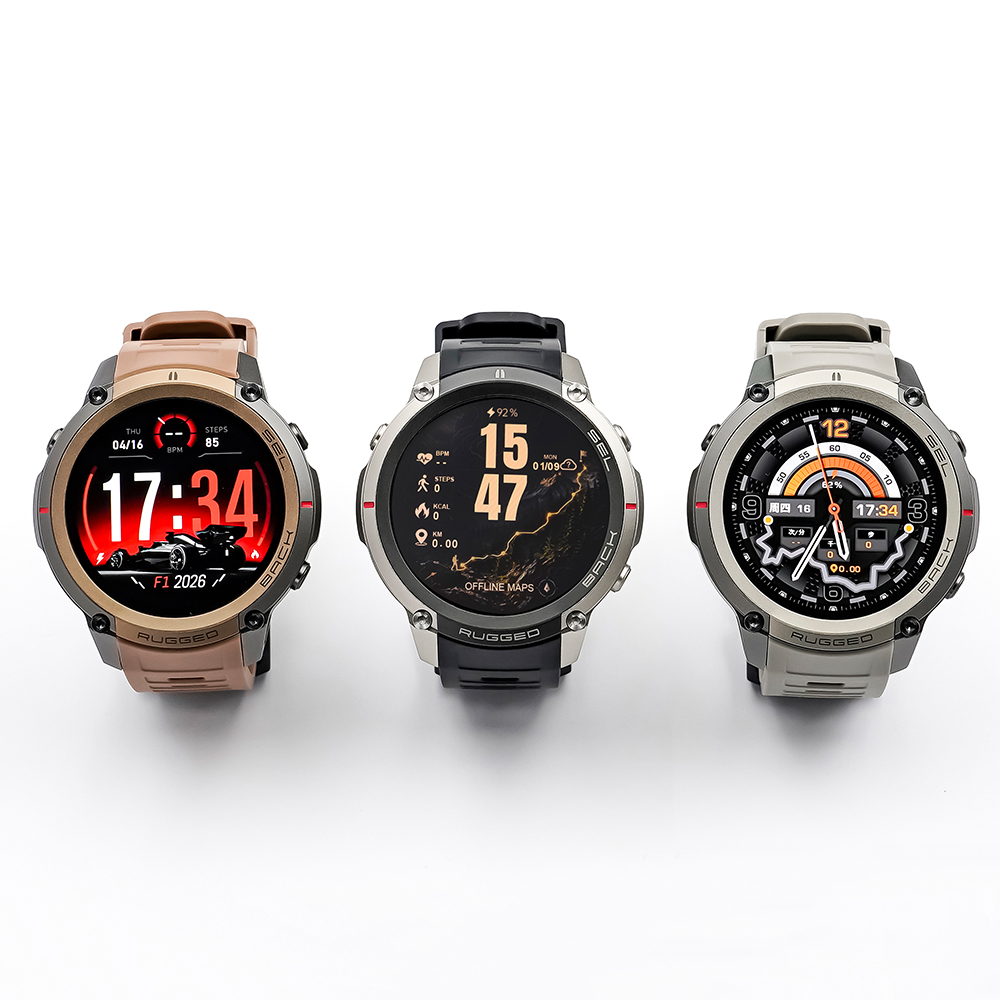
• Custom watch faces, menu order, icons, firmware UI, and startup logo
• Product name and Bluetooth device name
• App name, icon, theme, language, and selected reports
• Packaging, manuals, labels, QR codes, and accessory bundles
• Sports-mode configuration and selected firmware behavior
• SDK or data-integration evaluation where supported
• New ID, structure, molds, PCB, antenna, or feature development for qualified ODM projects
Changes to the case or internal structure may affect antenna, waterproofing, acoustics, thermal behavior, and production testing. The manufacturer should review these interactions before approving an industrial-design change.
From Sample Testing to Mass Production
Step 1: Requirement confirmation
The buyer provides the target market, positioning technology, core functions, app needs, estimated quantity, customization scope, compliance market, and target launch schedule.
Step 2: Model recommendation and sample test
The supplier recommends standard models and provides samples. The buyer tests GPS routes, battery, display, water-resistance documentation, comfort, sensors, app, Bluetooth, and primary sports modes.
Step 3: Customization specification
Both parties confirm logo files, watch faces, firmware changes, app scope, packaging, manuals, colors, accessories, certification needs, engineering cost, and development schedule.
Step 4: Golden sample approval
An approved sample or signed specification should define hardware, firmware, app version, colors, packaging, artwork, functions, and acceptance standards.
Step 5: Pilot and production
Where appropriate, a pilot run verifies assembly, waterproofing, GNSS, sensors, firmware, pairing, charging, aging, and packaging before mass production. Final inspection should follow the approved sample and agreed quality plan.
Buyers can compare SWL Technology’s professional dual-frequency outdoor GPS smartwatch (https://www.shanwuleng.com/products/professional-outdoor-gps-smartwatch), SNT Orbit GPS (https://www.shanwuleng.com/products/snt-orbit-gps-smartwatch), and full smart wearable catalog (https://www.shanwuleng.com/products).
Frequently Asked Questions
Is L1+L5 always more accurate than single-frequency GPS?
It can provide more consistent positioning in difficult environments, but performance also depends on antenna design, satellite systems, algorithms, firmware, case structure, and test conditions. Sample route testing remains essential.
How should we compare GPS battery life?
Request separate results for normal use, continuous single-frequency GPS, continuous dual-frequency GPS, always-on display, calls, maps, and other high-power functions. Confirm the test settings and temperature.
Is a 5ATM smartwatch suitable for swimming?
It may be suitable when the selected model’s verified design, test standard, and user instructions allow swimming. Confirm the exact limitations. A 5ATM marking alone should not be interpreted as approval for every water activity.
Does 10ATM mean the watch can be used for diving?
Not automatically. Professional diving requires additional design, testing, instructions, and often different standards. Confirm the intended depth, activity, dynamic pressure, button use, and test requirements with the manufacturer.
Can the watch connect to a Bluetooth heart-rate strap?
Selected platforms may support external Bluetooth heart-rate sensors. The protocol, pairing, reconnection, data display, recording, and strap compatibility should be tested before production.
What can be customized for a private-label GPS watch?
Common options include case or crown logo, watch faces, startup logo, firmware UI, Bluetooth name, app theme, packaging, manual, strap, colors, and accessories. Deeper hardware, antenna, app, SDK, or mold changes require project evaluation.
CTA
Looking for a GPS smartwatch manufacturer for a running, cycling, hiking, or outdoor brand? Contact SWL Technology (https://www.shanwuleng.com/contact) to discuss model selection, sample pricing, L1 or L1+L5 options, 5ATM or 10ATM requirements, private-label customization, and project-based quotations.